Effortless
2017
Oil on canvas
Tokyo | 2017
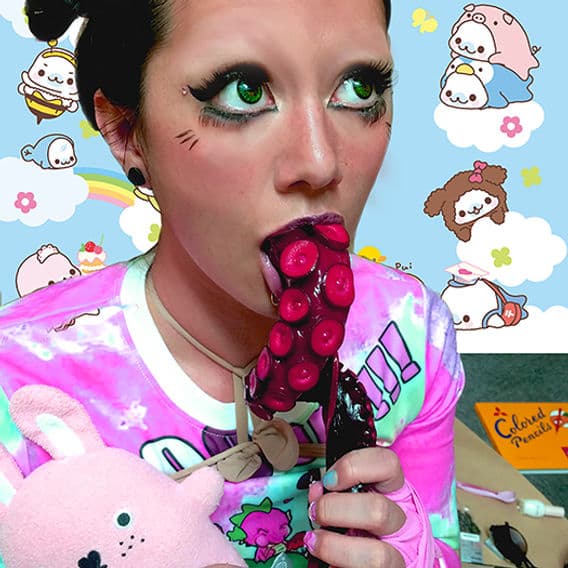
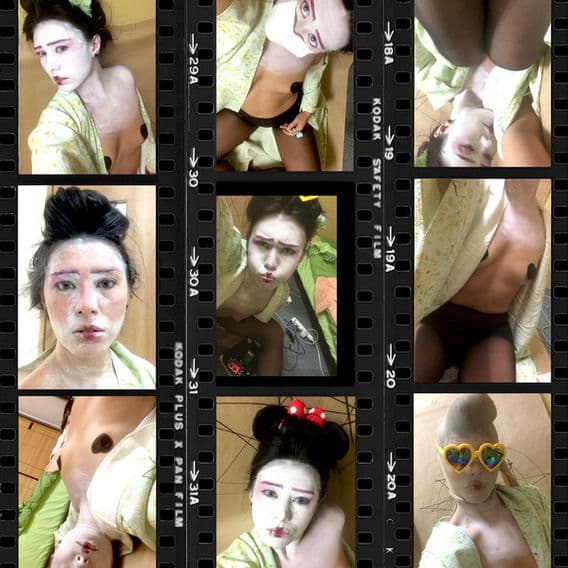
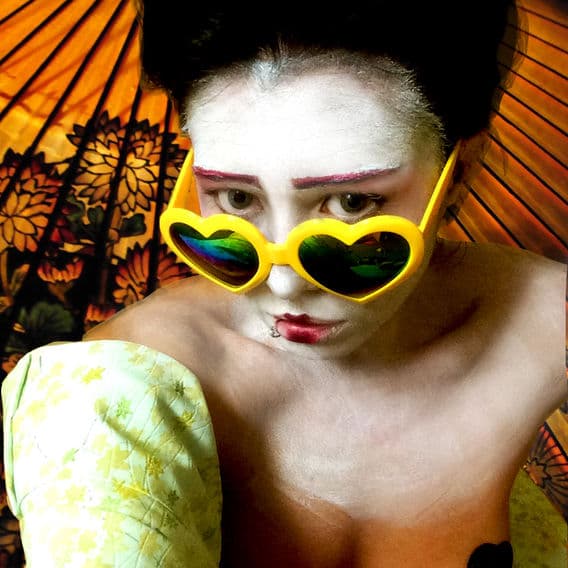
I started this work while living in Tokyo, interrogating the female experience observed and experienced in the city. The single word I felt best described the culture of Japan was "contradiction". I included writings and research on this in my book Tokyo Graffiti published in 2017. The complex culture that exists in a tenuous balance seems to teeter between ancient tradition, irreverence, and over-consumption.
I became preoccupied with the lack of acknowledgment or perhaps deliberate invisibility of the contradictions regarding females. I chose to highlight the duality of femininity, strength vs. fragility, freedom vs. enslavement, and symbol vs. human. Costuming became a physical meditation for me on the mutation of our roles in society. Whether in the traditional kimono, schoolgirl uniform, or the ropes of a Shibari master, these figures are restricted and ideas or archetypes are projected upon them. The paintings eventually dissolved the figure altogether, demonstrating the power of the costume alone.
"In Japanese, 'Shibari' simply means 'to tie'. The contemporary meaning of Shibari describes an ancient Japanese artistic form of rope bondage. The origin of Shibari comes from Hojo-Jutsu, the martial art of restraining captives. In Japan from 1400 to 1700, while the local police and Samurai used Hojo-jutsu as a form of imprisonment and torture, the honor of these ancient Samurai warriors required them to treat their prisoners well. So, they used different techniques to tie their prisoners, showing the honor and status of their captured prisoner."